
GNSS antennas for UAVs, rovers and ground applications
ThingsOnAir GmbH in Marburg, Germany, develops and builds GNSS antennas. Its product is the mGa1, a full L-band antenna for UAVs and ground use.
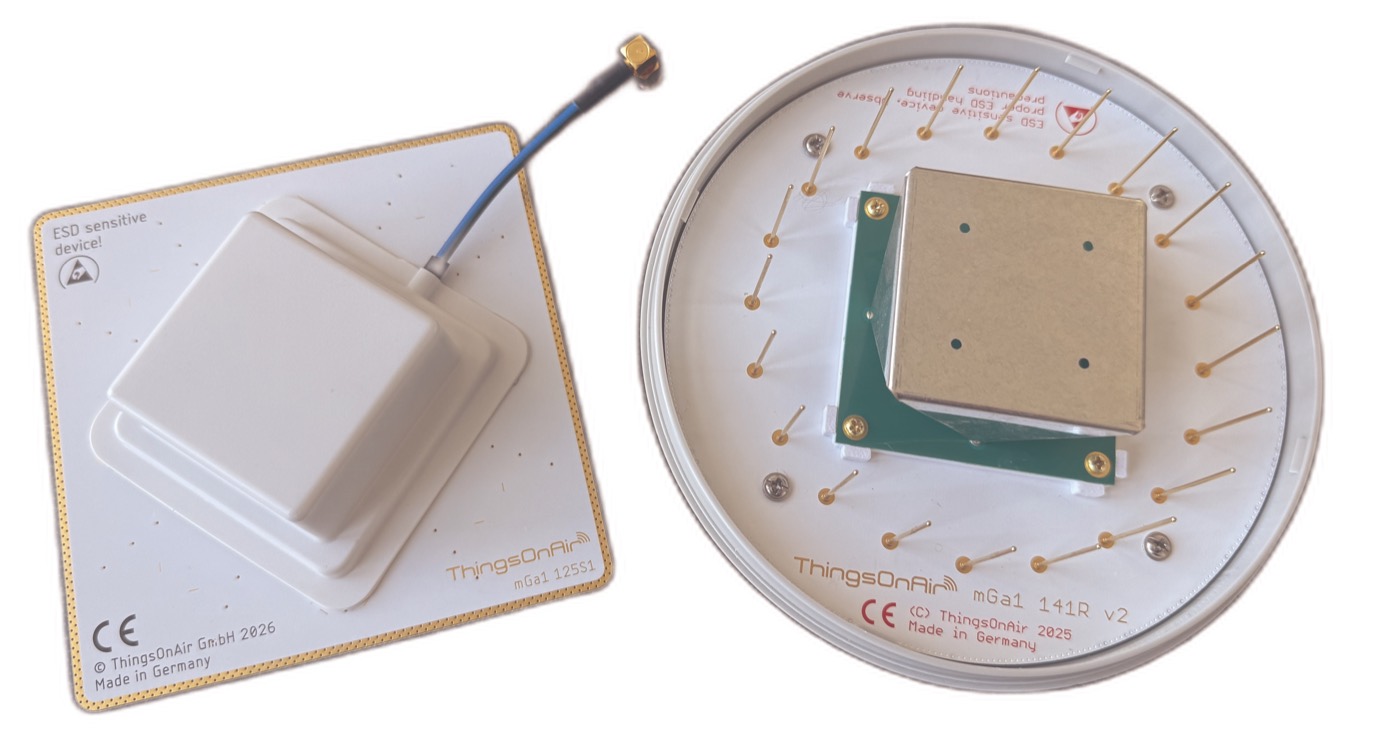
mGa1 full L-band GNSS antenna
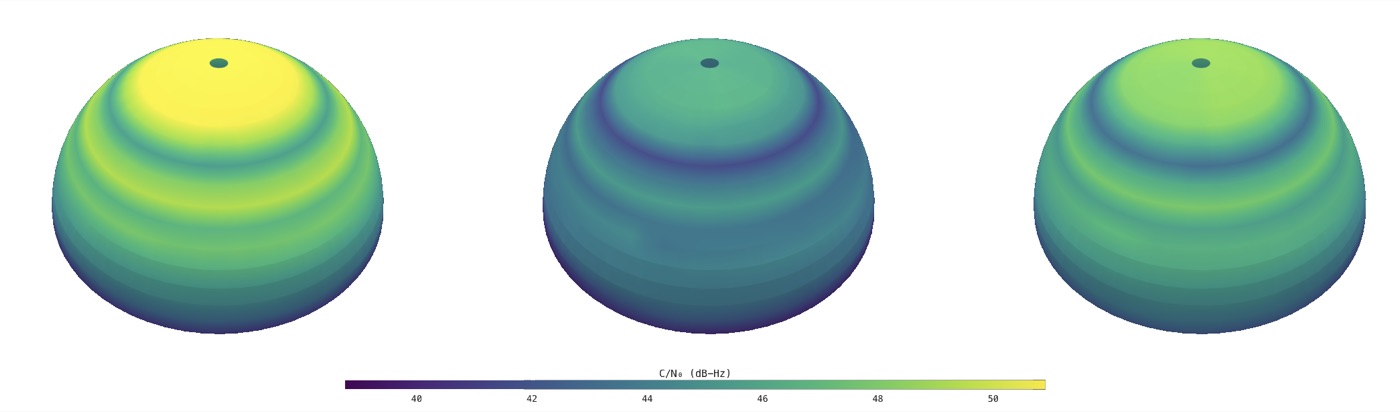
One broadband element receives GPS, Galileo, GLONASS, BeiDou, QZSS, SBAS and L-band correction services, on L1/E1, L2, L5/E5a, E5b and E6/L6. The radiation pattern is homogeneous, so positioning does not depend on the heading of the UAV or rover. The pattern was verified by ESA ESTEC. The antenna is based on patented Fraunhofer IIS technology and made in Germany.
For UAVs the mGa1 is a flat, open and very light module for the fuselage or wing. The weights of the variants are given in the datasheet. A ring of passive resonators, the resonator ring, is available as an option and strengthens reception of satellites near the horizon. A ground version with resonator ring for rovers, vehicles and base stations is in development.
Receivers: u-blox X20, R20 and F9, Septentrio mosaic-G5 and mosaic-X5, and similar multi-frequency receivers.
Adapted to your platform, if needed
Each mGa1 is tuned to its own ground plane and works as delivered. On request, ThingsOnAir adapts it to a customer’s platform: size and shape of the ground plane, cable and connector, mounting.
Housing, cable runs and nearby electronics all affect reception. A measurement on our turntable test site shows, before the system goes into service, what an installation gains or loses.
Measurement and analysis with ARA
ARA is ThingsOnAir’s own software for antenna and receiver analysis. On our test site, turntables and multi-band receivers let a reference antenna and the device under test see the same sky at the same moment. When we adapt an antenna to a customer’s platform, one design iteration, from modifying the antenna under test to evaluating the measurement, takes a few hours.
If you send us recordings from your receivers (SBF or RINEX), we evaluate them in ARA and discuss the results with you. On request we also compare your own antennas against a reference antenna in the field.

Contact
Product brief and measurement data on request.
ThingsOnAir GmbHFriedrichstr. 7
35037 Marburg, Germany
Phone +49 6421 8855005
E-mail info@thingsonair.com
Our products are intended for businesses, public authorities and research institutions. We do not sell to consumers.